The Path
Self‑Development Grounded in Timeless Wisdom.
Written to be legible to non‑Muslims, without diluting Islam's spiritual depth.
THE PATH - A Disciplined Mindset to Inner Peace
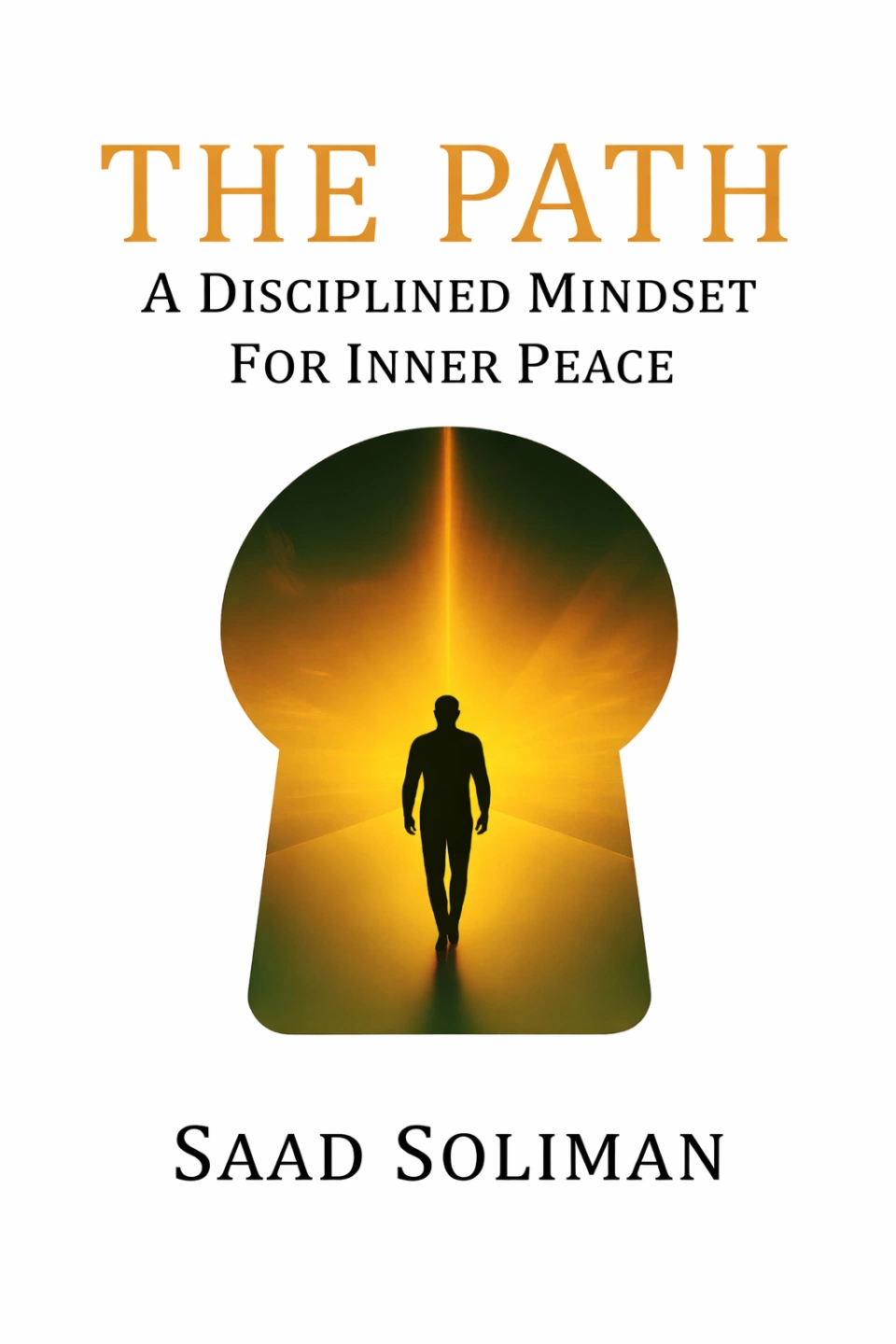
In a world of constant noise, distraction, and anxiety, most advice focuses on managing feelings. The Path starts earlier, with the inner architecture that shapes how you see reality in the first place.
Written for the intellectually curious, those guided by reason, in search of coherence, depth, and meaning, this book distils the core beliefs of Islam into a genuine human centric framework of self-awareness, focus, and purpose.
It reveals how inner peace emerges from recognition of life’s ultimate milestones and enduring truths.
Drawing on classical Islamic spiritual psychology—and written through the lens of a professional engineer—this book:
Maps how your deepest assumptions quietly drive your reactions, resilience, and sense of meaning.
Shows where Islamic practices align with modern therapeutic approaches to stress and anxiety.
Explains concepts like the human soul, Tawhid, and Shariah as a coherent psychological system rather than abstract theology.
Clarifies how disciplined inner work leads to calm, accountability, and strength, even if you don’t identify as religious.
You don’t need to be Muslim to benefit from it. You do need to be tired of superficial fixes and ready for a serious, structured alternative.
Who this book is for
Intellectually curious readers who find most self‑help too commercial or shallow.
Professionals and students feeling overwhelmed, anxious, or unmoored in a fast‑changing world.
Non‑Muslims and Muslims alike who want to understand Islamic spirituality as a deep, coherent worldview.
Readers of authors like Productive Muslim or Reclaim Your Heart who now want a more analytical, framework‑driven approach.
This book invites readers to look past the noise and rediscover timeless truths — offering a disciplined, thoughtful, and compassionate perspective on one of the world’s most influential traditions.
Cut Through the Static of Modern Life.
The Path is not another motivational pep talk or a repackaged personal development formula. It is a return to something far more grounded, a disciplined inner framework built on clarity, self-awareness, and an honest understanding of the human condition.
Drawing on the often-overlooked depth of Islamic spirituality—not as dogma, but as a refined psychology of the inner self—this work presents a framework that is both timeless and urgently relevant. It approaches faith not as sentiment, but as structure; not as escapism, but as formation.
Written for the intellectually curious, The Path explores enduring principles that cultivate lasting calm by reconnecting us with life’s deeper realities. You do not need to be Muslim to benefit from it. You simply need to be someone weary of superficial solutions and ready for substance.
Where modern self-help promises comfort, The Path calls for discipline.
Where trends offer distraction, it offers direction.
Where wellness culture centres on feelings, it restores foundations.
This is not about chasing fleeting states of happiness. It is about building inner stability that can withstand the weight of real life.
Author Biography
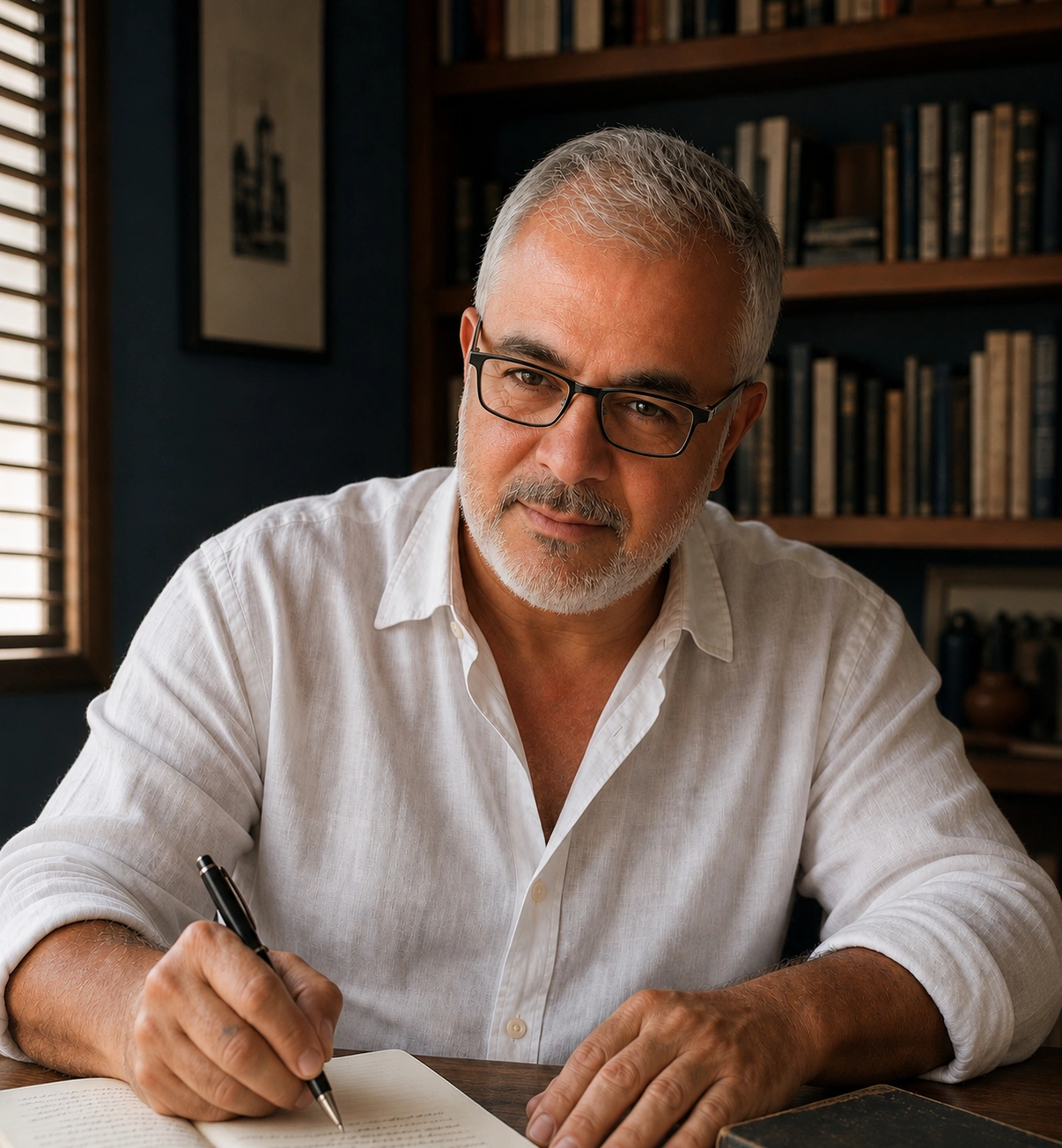
Saad Soliman
The author is a professional engineer whose work bridges structured analytical thinking with timeless spiritual wisdom.
For over three decades, his career involved feasibility studies, quality and environmental systems, governance, and evidence-based technical reporting — disciplines that demanded precision, clarity, and structural coherence.
Yet a deeper question gradually emerged:
Why are capable, intelligent people increasingly anxious in a world of unprecedented technological progress?
Over the past eight years, Saad has explored the intersection of mental wellbeing and classical Islamic spiritual psychology. Approaching the subject with the same disciplined methodology he applied in engineering, he returned to first principles — examining how foundational beliefs shape interpretation, resilience, and emotional stability.
What he discovered was not abstract theology, but a coherent inner architecture: a structured way of thinking that cultivates calm, accountability, and strength in uncertain times.
His writing is aimed at the intellectually curious — professionals and seekers who value reason, depth, and coherence over motivational rhetoric.
The Path – A Disciplined Mindset for Inner Peace reflects this integration of rational clarity and spiritual grounding.
Testimonials
Reader Comments
Purchase Site Options:
E-Book Purchase Sites
Paperback Purchase Sites
Books on Line Australia AUD $32.95
Prices exclude shipping and VAT
Blog Posts
The following presents narratives recently posted on Social Media.
If you’ve spent any time in the self‑help or “personal growth” sections as I have, you’ve probably noticed a strange tension.
On one hand, we have access to more advice, tools, “hacks,” and information than at any other time in history. On the other, the norm for a lot of us is a sense of inner instability, distraction, lack of clarity, and uncertainty even among people who appear successful and “put together.”
For over three decades, I worked as a professional engineer. My world was delivering projects and tasks on time and budget. It was all very dry and technical. Everything had to balance and work as intended. This involved feasibility studies, quality and environmental systems, governance and compliance, and evidence‑based technical reporting. My job was to make sure complex things were structurally sound, that assumptions were clear, methods were coherent, and conclusions followed logically from hard data. I highlight this because the technical writing style is evident in my book, and based reviews, it did not resonate with some Self-Help readers.
Reason, Purpose and Intent
As I aged, I kept seeing the same pattern that I experience within myself and in my professional and social circles - highly capable and intelligent people were quietly struggling with restlessness, dissatisfaction, anxiety, and a sense that something essential was missing.
The question that wouldn’t leave me alone was - Why are people who seem to have “everything” that they need are unsettled, lacking mental clarity and are masking depression?
That question eventually became reason for the book.
Looking Beneath the Surface of Self‑Help
Most of what we call self‑help focuses on techniques that foster:
Better habits
Productivity systems
Coping tools
“Mindset shifts” in a few pages
These can be useful, but they largely assume that the underlying framework we use to interpret life is basically fine. The assumption is that everything is fine on the outside and the problem is within. The focus becomes effort to manage stress and align thoughts within that framework.
As some-one who is conditioned to identify and address root causes, I couldn’t help seeing that many people were trying to renovate the “furniture” of their lives while the foundations of the building were cracked.
Underneath all our personal goals and strategies lie some unspoken questions and assumptions:
What is a human being, really?
Is life a random sequence of events, or does it have a clear purpose?
What counts as success?
What is suffering for?
What do we actually think happens after death and does that belief touch our daily choices at all? Are there consequences for our actions?
You don’t need religious or spiritual inclination to have these thoughts and questions. They are there, quietly shaping how we experience every high and low. Yet the modern mindset often overlooks these core humanist questions.
Returning to an Old Framework with Fresh Eyes
As a Muslim, I grew up with access to an older, very detailed intellectual and spiritual tradition. Over time, and as I started to look deeper into myself and what spirituality actually is, I came to see that what we call “Islam” is not just a set of rituals or rules, but a coherent inner architecture. The culmination and final chapter of a monotheistic tradition as old as humanity and offers:
* A view of what a human being is (a soul on a journey through multiple realms)
* A clear sense of time, trial (sometimes suffering), and accountability
* A set of integrated practices designed to reshape perception and character over timeI discovered that classical Islamic scholars sometimes described this as a kind of spiritual psychology — a way of understanding and training the inner self.
But much of this depth is:
Misrepresented in media
Drowned in cultural baggage
Or discussed in ways that feel opaque to modern, secular‑educated readers
So, I tackled this in the technical manner that I was trained to do - to go back to first principles.
Over about eight years, I studied classical Islamic spiritual psychology and to familiarize myself with the practices of modern psychology with one main question in mind - If we treated this not as abstract theology, but as a complete inner framework, what would it say to a person living with modern anxiety, distraction, and loss of meaning?
The Path is my attempt to answer that question.
What The Path actually is (and is not)
A few readers have said it better than I could, so I’ll borrow their words.
One recent Goodreads reviewer, who described herself as “not religious” and knowing very little about Islam wrote:
“I downloaded this expecting more of a self help book rooted in psychology with tips on discipline, organization, and structure. I’m not religious, but like to expand my world view…
This book is a deep dive into the psychological and spiritual resilience that Islamic practices offer. It was very approachable and surprisingly scientific / analytic / academic… It felt like an informative read rather than a book that was trying to convert.”
Another Amazon reviewer commented:
“A practical guide to staying grounded and focused… The author connects mindset, habits, and emotional control, showing how inner peace isn’t something you stumble into—it’s something you build intentionally.”
Another wrote:
“This self help book isn’t your typical feel good book. It’s way deeper… It makes you really think about life, purpose, and how you can handle stress instead of finding temporary fixes… If you’re into real growth and not just surface level advice, this book hits different and actually sticks with you.”
Those reviews capture what I was trying to do:
Not another feel‑good, quote‑driven self‑help book
Not a preachy religious book trying to win an argument or “convert” anyone
But a clear, structured exploration of an inner framework that has been tested over centuries—and how it speaks to our current psychological landscape
How the Book is Structured
The Path is not built around anecdotes or slogans. It’s organised like a long, careful feasibility study of a worldview. Across the chapters, I try to:
Clarify key concepts: the human soul, the nature of God, revelation, law (Shariah), "jihad" as the inner struggle, the place of women, the role of knowledge.
Show how these ideas fit together as a cohesive architecture, not just isolated doctrines.
Compare the “Islamic model” with dominant secular approaches — materialism, liberal individualism, modern therapeutic culture — using tables, timelines, and diagrams rather than emotional rhetoric.
Ask honestly: what are the strengths and weaknesses of each frame when it comes to resilience, meaning, and accountability?
You don’t need any prior knowledge of Islam to follow it. The book assumes curiosity, not expertise.
Who I Wrote this Book for
When I was writing, I had a specific kind of reader in mind:
* Someone who values reason and coherence and is wary of being emotionally manipulated
* Someone who senses that modern self‑help is too commercial or superficial
* Someone who has perhaps tried therapy, mindfulness apps, productivity systems, and still feels a quiet restlessness
* Someone who might be Muslim revert, another faith, or not religious at all, but is willing to consider that our current secular assumptions are not the only way to see the world.
If you recognise yourself in that description, the content may resonate with you.
You will find:
Challenges to your existing assumptions (including some of mine)
Heavy sections at times - because topics like suffering, death, and moral responsibility are heavy by nature
But also, I hope, a sense that there is a way to live with more stability and clarity than our current culture tends to offer
Why this Matters to me
Writing this book was not an easy decision. The subject is socially charged. Islam is often discussed either defensively, polemically, or superficially. I knew that whatever I wrote would be read in that context.
I’m not claiming in any way to be an Islamic Scholar, or a mental health specialist or have all the answers, but to present an alternative perspective that has been largely overlooked. What I do believe is that:
We cannot keep treating anxiety and inner instability as merely individual or chemical problem while ignoring the societal challenges and barriers that produce them.
We need serious, intellectually honest conversations about meaning, purpose, and the architecture of the self.
Spiritual traditions, including Islam, still have deep, carefully worked‑out insights to offer, if we are willing to examine them patiently and critically.
The Path is my small contribution to that conversation.
If you Decide to read it…
If you pick up the book, I’d love for you to:
Read slowly. It’s designed more like a course than a quick “weekend inspirational” read.
Pause at the diagrams and tables. They’re not decorations; they’re meant to clarify how ideas connect.
Disagree with parts of it but do so in dialogue with what is actually being presented, not with the stigmatism of religion.
And if you do read it, I would be genuinely grateful if you left an honest review on Goodreads, or wherever you prefer. Your reflections, especially from different backgrounds and perspectives, help others decide whether this is the kind of exploration they’re ready for.
Thank you for your time, curiosity, and willingness to think beneath the surface and feel free to email me any questions or comments that you may have.
At its core, The Path is about understanding how the mind works when stripped of noise. It explores:
Why clarity matters more than comfort
How disciplined thinking protects you from emotional turbulence
Why inner peace is a by‑product of living in alignment with enduring truths
How self‑awareness builds resilience far more effectively than positive thinking
These aren’t abstract ideas. They’re practical, actionable principles drawn from a tradition that has spent centuries studying the human psyche long before “mindfulness” became a trend.
We live in a time where attention is fragmented, identity is unstable, and meaning is often outsourced to trends. The Path argues that inner peace is not found in novelty but in returning to the fundamentals of being human.
It shows how lasting calm emerges from recognising life’s enduring truths—truths that don’t shift with culture, technology, or fashion.
If you’ve ever felt that modern self‑help is too shallow, too commercial, or too disconnected from real human experience, this book offers a refreshing alternative: depth without dogma, discipline without harshness, spirituality without vagueness.
Mental wellbeing takes real effort. There are no silver bullets. Quick fixes and trends often fail because they ignore the root causes. The Path cuts through the static of modern life, clearing misconceptions and restoring a disciplined, grounded mindset, offering practices that address causes rather than symptoms. Drawing on the often‑overlooked depth of Islamic spirituality, it presents principles that build self‑awareness, resilience, and inner peace. Written for the intellectually curious, it shows how lasting calm emerges from recognising life’s enduring truths.
Contact Author
Please provide your details below along with your message and we'll reply as soon as possible.